Lawsuit Filed to Halt Seafood Imports from Foreign Fisheries Killing Marine Mammals With Fishing Gear
US Embargo Would Push Argentina, UK, India, Other Governments to Act
May 21, 2026 in Marine Wildlife
New York, NY—Conservation groups sued the National Marine Fisheries Service and US government officials today to stop seafood imports into the United States from eight foreign fisheries that incidentally entangle and kill too many marine mammals.
As the world’s largest seafood importer, the United States requires a ban on seafood imports from countries that fail to apply similar marine mammal “bycatch” measures as those required in the United States.
“The United States can save the lives of countless whales and dolphins getting caught in fishing gear around the world, but only if it enforces the law,” said Sarah Uhlemann, international program director at the Center for Biological Diversity. “This litigation should result in a seafood import ban for the eight nations, and the governments will have to crack down on deadly bycatch to get back into the lucrative US seafood market.”
The lawsuit, filed in the US Court of International Trade, challenges imports from Argentina, Ecuador, India, Norway, Taiwan, Tunisia, the United Kingdom, and Vanuatu, where commercial fishing practices kill unsustainable numbers of marine mammals. These fisheries also use some of the deadliest types of fishing gear, such as gillnets, longlines, and trawls. And they often fail to sufficiently track the number of marine mammals killed, as required by US law.
“Americans want seafood that doesn’t lead to the deaths of thousands of whales or dolphins,” said Zak Smith, director of global biodiversity conservation at NRDC (Natural Resources Defense Council). “The US seafood industry is a world leader in this, but our government continues to let foreign fisheries peddle their whale- and dolphin-killing fish into the United States as long as these governments say they’re ‘trying.’ That is not good enough. It’s time for our government to work for US consumers and fishers and stop letting foreign fisheries off the hook.”
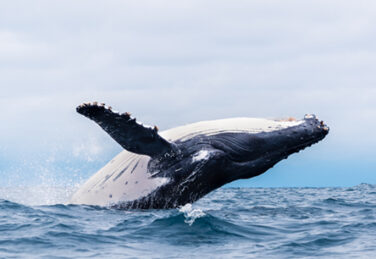
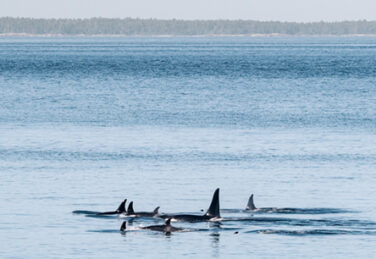
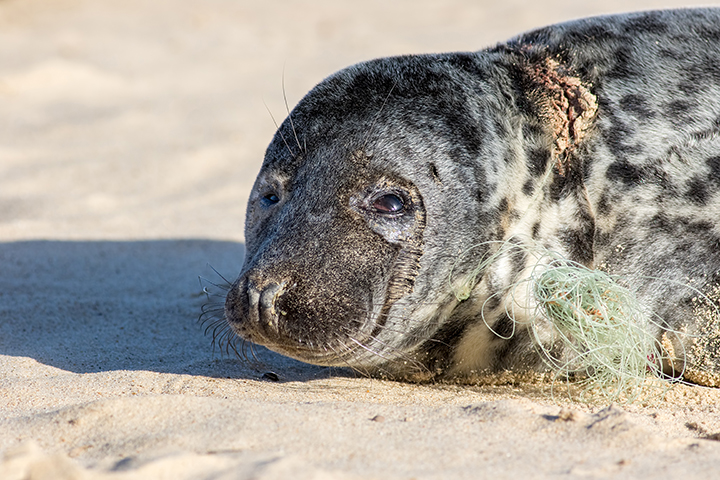
Bycatch is the greatest conservation threat to marine mammal populations worldwide. Each year, more than 650,000 whales, dolphins, and other marine mammals are caught and killed in fishing gear around the globe. These animals either drown or are tossed overboard to die from their injuries.
Argentina’s shark and croaker fishery kills nearly three times the sustainable number of franciscana, a small, imperiled dolphin. Vanuatu’s tuna fishery operates in high-seas waters alongside US vessels, but Vanuatu vessels fail to use the same special hooks as US fishers to reduce bycatch of endangered false killer whales.
“Marine mammals play an immensely important role in ocean ecosystems, and saving our oceans is vital to saving our planet,” said Georgia Hancock, director and senior attorney of the Animal Welfare Institute’s Marine Wildlife Program. “Through lenses ranging from welfare and conservation to economic fairness, it is simply unacceptable that foreign fisheries are killing these amazing animals by the thousands while still being allowed to export seafood products to the United States.”
In 2025, the United States imported billions of dollars’ worth of seafood products from more than 140 nations. An estimated 80% of seafood consumed in the United States is imported, including shrimp, tuna, and other fish.
The plaintiffs are represented by attorneys from Earthjustice.
“Thanks to the Marine Mammal Protection Act, the United States has worked to save countless numbers of whales, dolphins, and other animals from dying in fishing gear,” said Danika Desai, senior attorney with Earthjustice. “But many other governments do not have similar protections and fisheries drown and injure marine mammals at alarming rates. Seafood from those dirty fisheries will wind up on our plates unless the US government follows the law and bans it.”
Media Contact Information
Sarah Uhlemann, Center for Biological Diversity
(206) 327-2344, suhlemann@biologicaldiversity.org
Andrew Scibetta, NRDC
(202) 289-2421, ascibetta@nrdc.org
Kim Meneo, Animal Welfare Institute
(202) 446-2116, kim@awionline.org
Julie Hauserman, Earthjustice
jhauserman@earthjustice.org
About AWI and Partners
The Center for Biological Diversity is a national, nonprofit conservation organization with more than 1.8 million members and online activists dedicated to the protection of endangered species and wild places.
NRDC (Natural Resources Defense Council) is an international nonprofit environmental organization with more than 3 million members and online activists. Established in 1970, NRDC uses science, policy, law and people power to confront the climate crisis, protect public health and safeguard nature. NRDC has offices in New York City, Washington, D.C., Los Angeles, San Francisco, Chicago, Beijing and Delhi (an office of NRDC India Pvt. Ltd).
The Animal Welfare Institute (awionline.org) is a nonprofit charitable organization founded in 1951 and dedicated to alleviating animal suffering caused by people. We seek to improve the welfare of animals everywhere: in agriculture, in commerce, in our homes and communities, in research, and in the wild. Follow us on Facebook, Instagram, Threads, Bluesky, and LinkedIn for updates and other important animal protection news.
Latest AWI Quarterly Articles
See All Marine Wildlife AWI Quarterly Articles