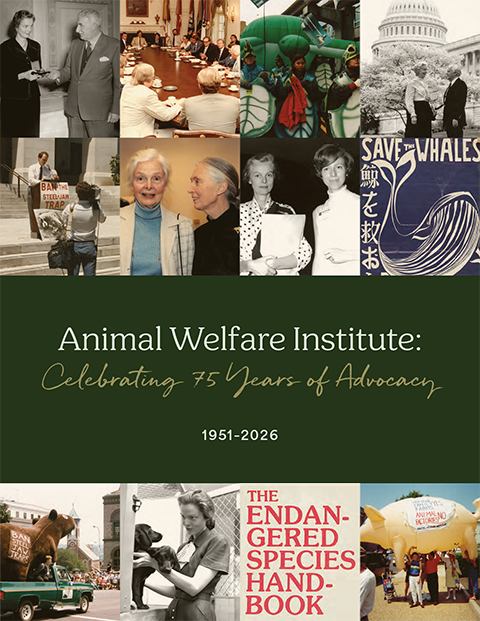
Betsy Beaver. Photo by AWI Archive
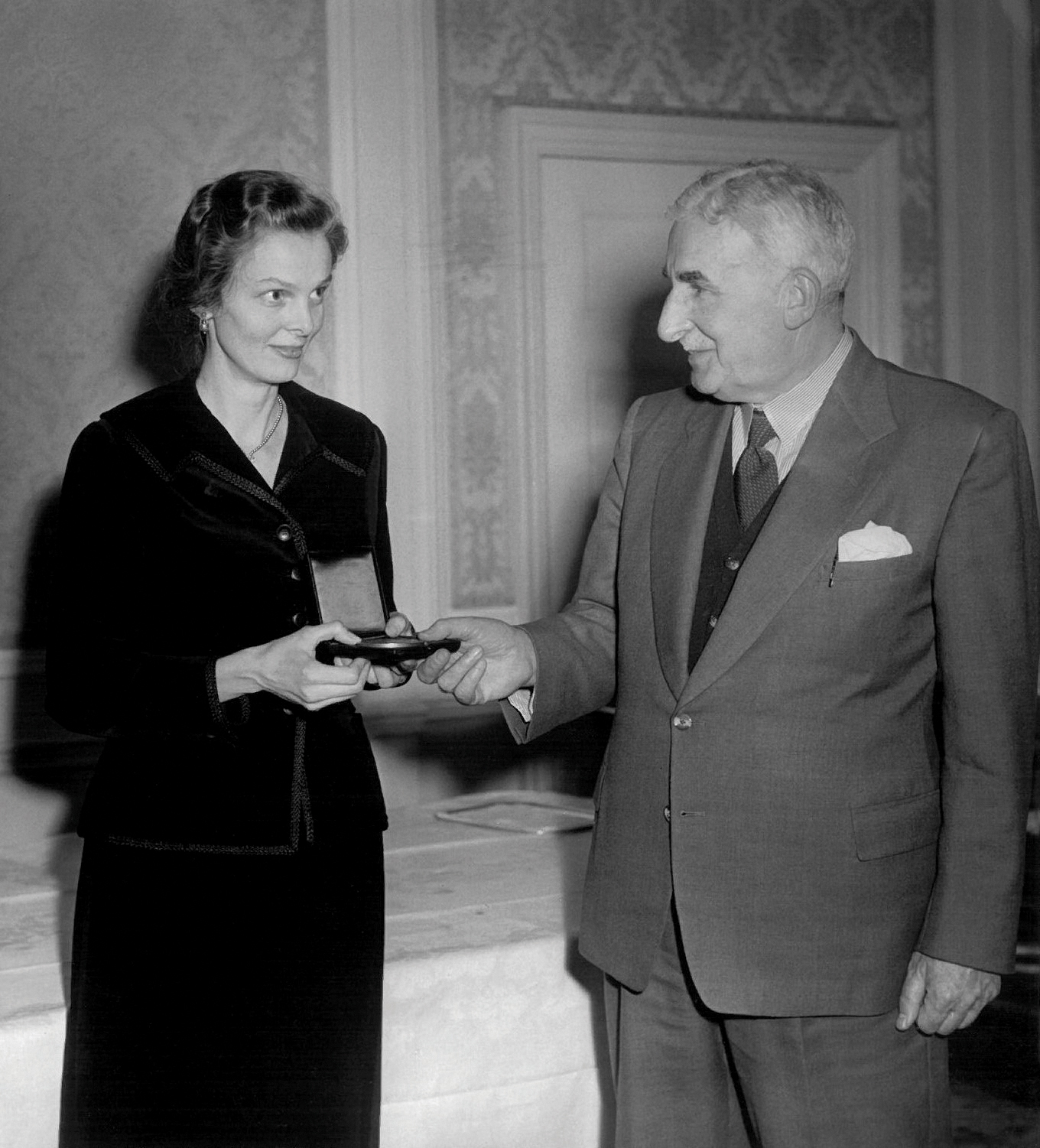
Christine Stevens and Major Hume Schweitzer. Photo by AWI Archive
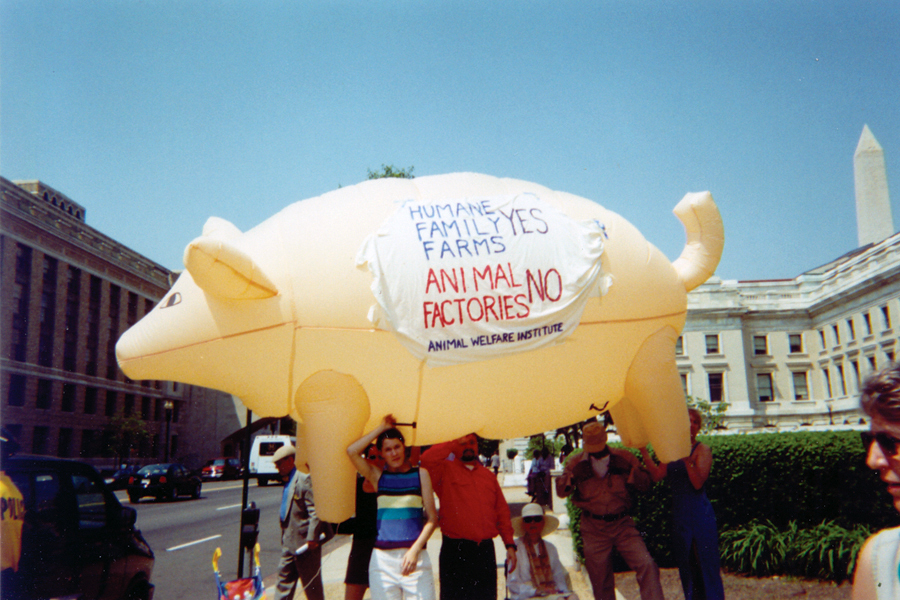
Factory Farms Protest. Photo by AWI Archive
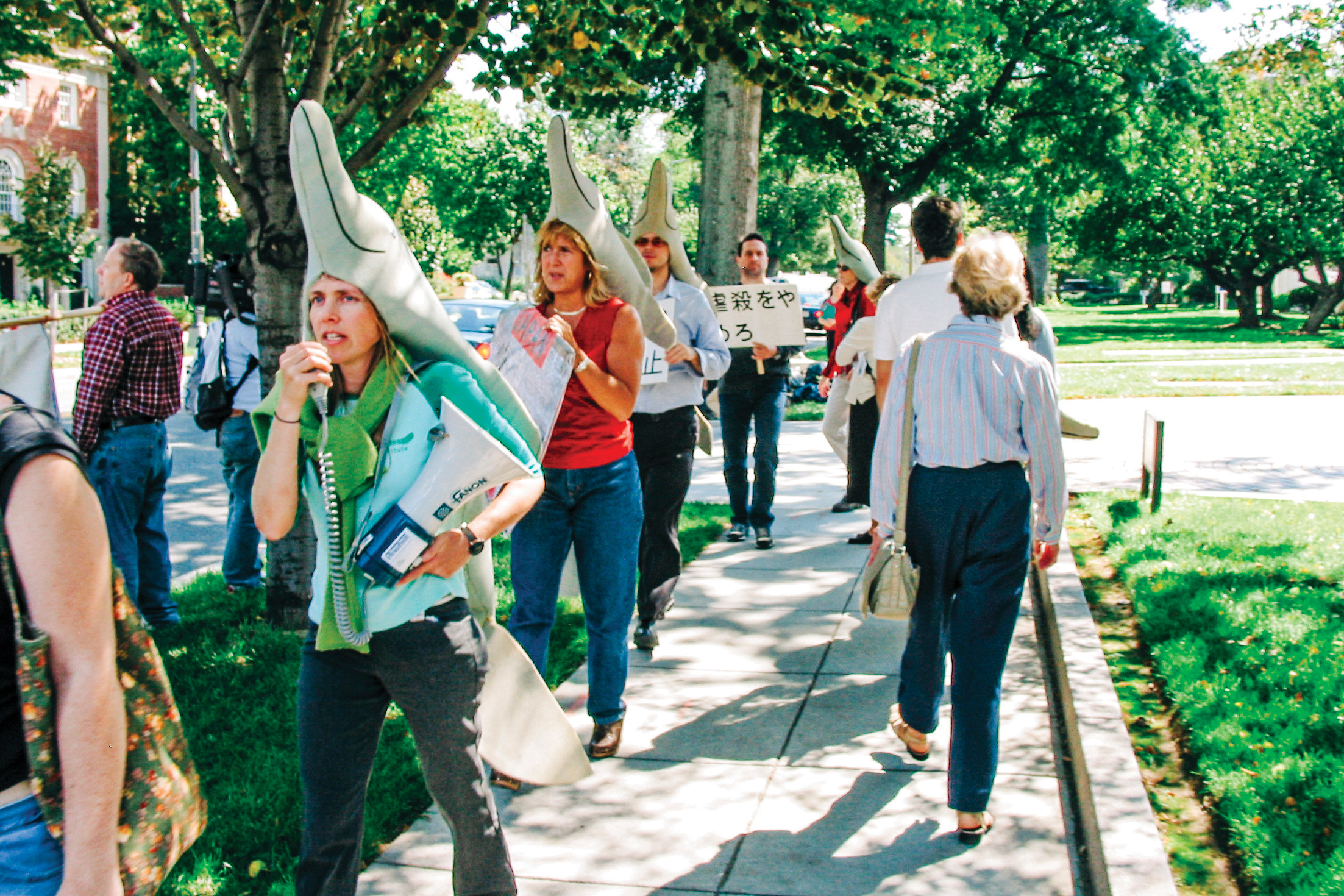
Susan and Cathy at Dolphin Protest. Photo by AWI Archive
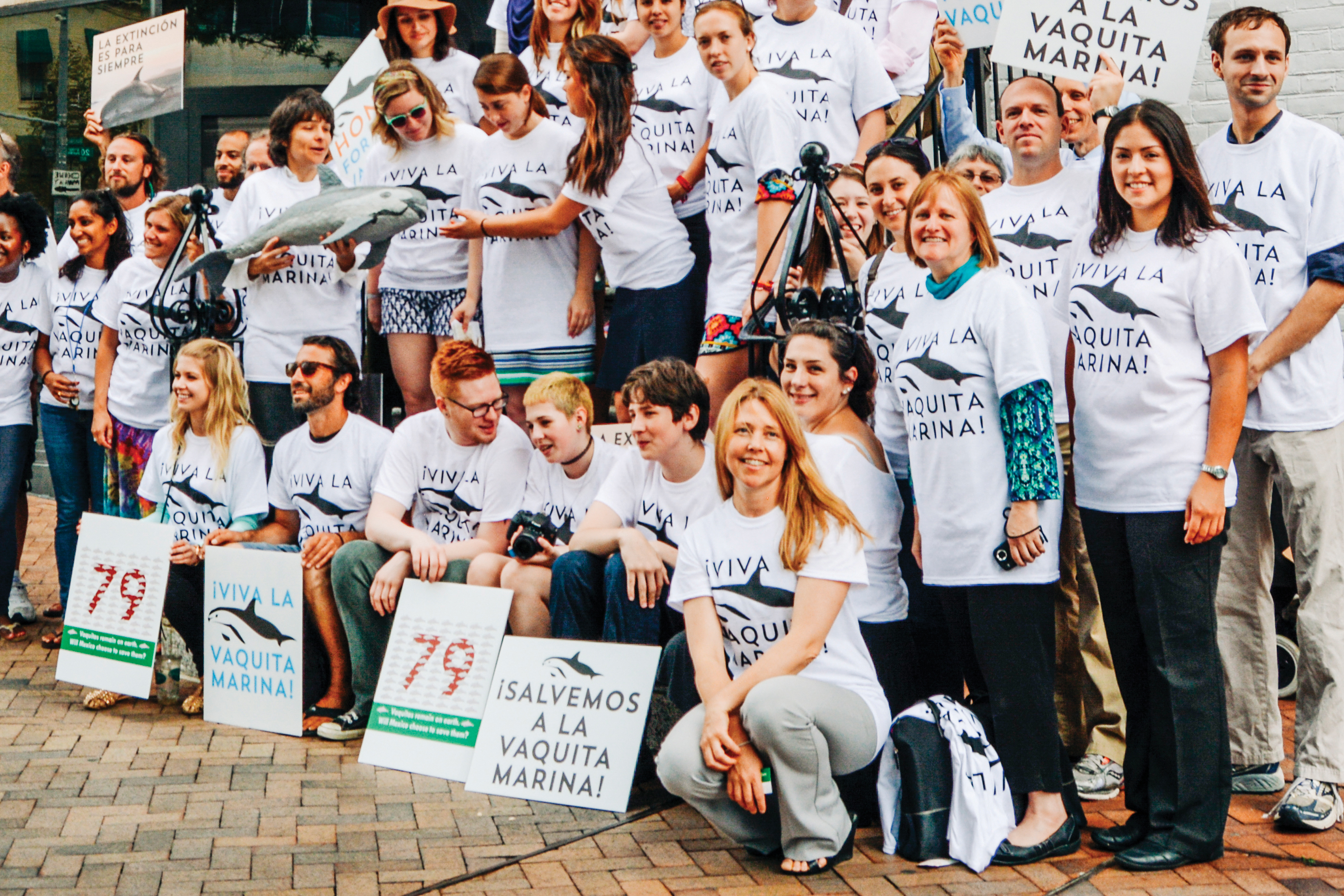
Susan at Vaquita Rally. Photo by AWI Archive
A Message from Susan Millward
When Christine Stevens founded AWI on July 10, 1951, she envisioned an organization that charted a middle ground between researchers who insisted on unfettered access to animals used in laboratories (irrespective of welfare concerns), and antivivisectionists who rallied to abolish animal experimentation entirely.
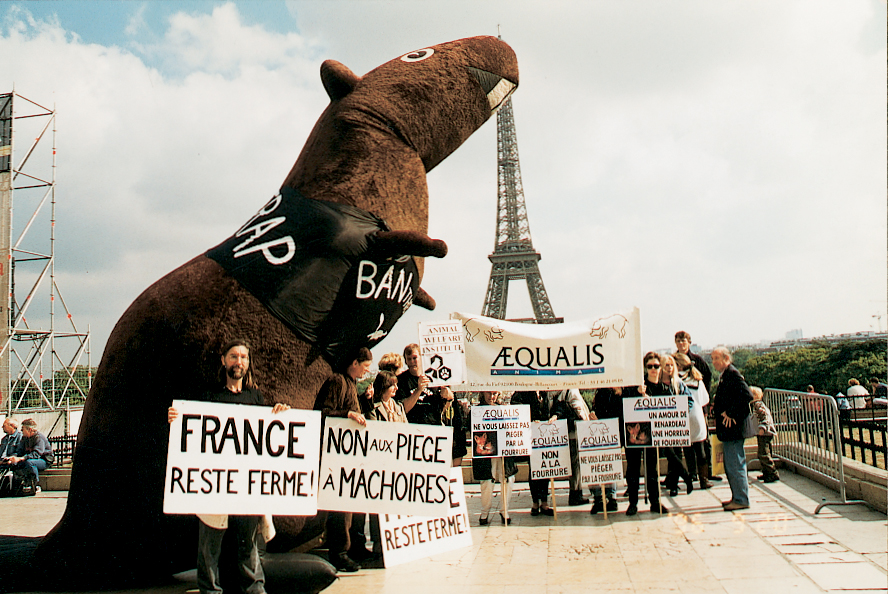
The focus of AWI's work soon expanded to address many other areas of unnecessary animal suffering, including stolen cats destined for student dissections, pigs hoisted and butchered while still conscious, whales hunted and harpooned to the point of extinction, wild horses poisoned at waterholes, and beavers with limbs crushed by steel-jaw leghold traps.
Ever the pragmatist, Christine prioritized battles where meaningful progress could be achieved, armed with indispensable data. Elegant and gracious, she was also fearless and relentless. With the support of her husband, real estate executive and theatrical producer Roger Stevens, Christine capitalized on the couple's extensive political and art world connections to persuade those in power and advocates on the ground to take action to prevent human-inflicted animal suffering. As Harper's Magazine declared in 1962, "Within the span of a decade, she has managed to establish herself as America's leading protagonist for animal protection in all its sensible forms."
AWI's resolute efforts helped shepherd the passage of dozens of vital laws that remain in force today, including the Humane Methods of Slaughter Act, the Animal Welfare Act, the Marine Mammal Protection Act, the Endangered Species Act, and the Wild Bird Conservation Act. Globally, AWI was instrumental in achieving a moratorium on commercial slaughter of whales and a ban on the commercial trade of ivory to protect elephants from poaching, among other accomplishments.
From our early days as a skeletal staff in the Stevens's home to the current organization of 35 employees based in our Capitol Hill office and throughout North America, AWI has made great strides across key campaigns while defending against persistent attacks to weaken animal protections. We encourage you to read our special 75th anniversary publication, an extended timeline of major events in AWI's history, along with video interviews of former and current AWI leaders and staff who have helped cement Christine's legacy.
Christine once said to a colleague, "If we weren't here, can you imagine how bad things would be today?" Although we still face enormous challenges, AWI stands ready — with our members and supporters — to continue improving the lives of animals over the next 75 years and beyond.
Highlights of AWI's History
Christine Gesell Stevens is born in St. Louis, Missouri.
Christine founds the Animal Welfare Institute (AWI) to alleviate animal suffering caused by humankind, with initial headquarters in the Empire State Building. Initial efforts focus on the welfare of animals in laboratories.
Dr. Albert Schweitzer gives AWI permission to strike a medal in his honor to present to individuals in recognition of outstanding achievement in the advancement of animal welfare.
Learn MoreAWI publishes the first Information Report, precursor to the AWI Quarterly magazine.
AWI publishes Comfortable Quarters for Laboratory Animals, with plans and details for providing animals in laboratories with more humane housing conditions. Ten editions have been published to date, with an 11th edition currently in production.
AWI presents a gold replica of the Schweitzer Medal to Dr. Schweitzer. One year later, the first Schweitzer Medal is awarded to Dr. Robert Bay, a veterinarian who strove to create humane conditions for a colony of 500 beagles used in research.
The Society for Animal Protective Legislation (SAPL) is established as a companion organization to AWI. It is the first organization in the United States dedicated to the passage and promotion of animal welfare legislation.
Facts About Furs by Dr. F. Jean Vinter is published by the Universities Federation for Animal Welfare. AWI subsequently publishes two more editions of this book, which documents the severe cruelty of the fur trade, including the use of steel-jaw leghold traps.
The Humane Methods of Slaughter Act is signed into law. It requires that meat sold to the US government come from cattle, pigs, and other livestock (though not poultry) who were humanely handled and stunned prior to slaughter.
Learn MoreThe Wild Horse Annie Act is signed into law. It prohibits the poisoning of wild horse and burro waterholes and the use of motorized vehicles to round up wild horses for sale to slaughterhouses.
AWI publishes Humane Biology Projects to promote scientific training that doesn't inflict suffering on animals.
Life magazine publishes "Concentration Camps for Dogs" based on AWI laboratory animal consultant Dorothy Dyce's account of horrific conditions on the premises of a Maryland dog dealer who sold animals to laboratories. The article helps galvanize support for passage of the Laboratory Animal Welfare Act.
The Laboratory Animal Welfare Act is signed into law. It sets minimum standards of care and housing for dogs, cats, primates, rabbits, hamsters, and guinea pigs on the premises of animal dealers and laboratories. To prevent theft of pets, it requires identification of all dogs and cats handled in commerce by dealers. Dealers must be licensed and laboratories must be registered.
The Endangered Species Preservation Act is signed into law. It authorizes the Department of the Interior to identify endangered native species of fish and wildlife and acquire habitat for such species for inclusion within the National Wildlife Refuge System.
AWI publishes Animals and Their Legal Rights, a survey of US animal protection laws. Three more editions of the book are subsequently published.
The Horse Protection Act is signed into law to protect walking horse breeds from soring the practice of inflicting pain on horses' legs and hooves to induce an exaggerated high-stepping gait for competitions.
Learn MoreThe Laboratory Animal Welfare Act is amended and renamed the Animal Welfare Act. The amendments extend the law's protections to warm-blooded animals in use or intended for use in research, exhibitions (e.g., zoos, circuses), or the pet trade. One year later, the USDA publishes regulations that contrary to the language of the statute exclude birds, rats, and mice from coverage under the law.
Learn MoreAWI and allies launch the Save the Whales campaign calling for an end to commercial whaling.
Congress passes resolutions calling for a 10-year international moratorium on commercial whaling.
The Wild Free-Roaming Horses and Burros Act is signed into law, providing for the protection and management of wild horse and burro populations.
Learn MoreAWI moves headquarters to Washington, DC (eventually to be sited in Christine and Roger's Georgetown home).
The Marine Mammal Protection Act is signed into law. It prohibits the killing, taking, or harassing of marine mammals without a permit. Earlier, in testimony before Congress in support of the bill, Christine played an excerpt from Songs of the Humpback Whale, a 1970 album produced by biologist and AWI Scientific Advisory Committee member, Dr. Roger Payne.
Christine attends International Whaling Commission meeting in London to urge a global ban on commercial whaling.
Christine attends the plenipotentiary conference in Washington, DC, that launches the Convention on International Trade in Endangered Species of Wild Fauna and Flora (CITES).
The Endangered Species Act (ESA) is signed into law to protect and recover endangered and threatened species and the ecosystems upon which they rely. In testimony before Congress in support of the bill, Christine had stressed, "To turn the tide of extinction, a substantial edifice of rational protection has to be built. Each building block must be solid and strong."
Learn MoreA front-page article in The Wall Street Journal reports on AWI Scientific Committee member Dr. F. Barbara Orlans's findings that a large proportion of science projects involve the suffering and/or death of vertebrate animals.
The Animal Welfare Act is amended. Coverage is extended to animals held by carriers, intermediate handlers, and animal brokers. Coverage of dogs is expanded to "all dogs including those used for hunting, security, or breeding purposes." Commerce in animals for use in animal fighting is prohibited. Federal agencies using animals in laboratories are required to show full compliance with the law.
The Horse Protection Act is amended to increase civil fines and raise criminal penalties for soring.
The Humane Methods of Slaughter Act is amended to extend the humane handling requirements of the 1958 law to all commercial US slaughter plants and foreign plants exporting to the United States. USDA inspectors are empowered to stop the slaughter line if they observe violations.
The Packwood-Magnuson Amendment to the International Fishery Conservation and Management Act is signed into law. It severely restricts access to US waters of nations whose fishing practices diminish the effectiveness of international whaling agreements.
Scroll to explore → View the complete timeline
75 Years of Impact
From landmark legislation to global campaigns — discover the milestones that define AWI's legacy.
View the Complete Timeline