Volume: 75 Issue: 1
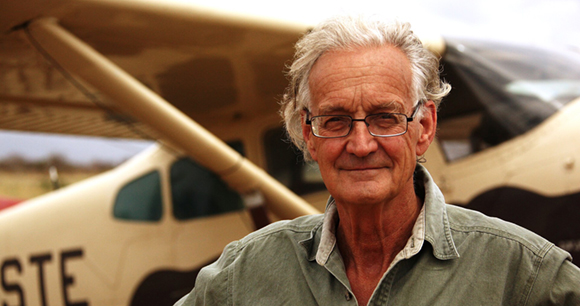
Dr. Iain Douglas-Hamilton
Dr. Bill Clark
The African elephants have lost their great champion. Nature herself has lost a knowledgeable and eloquent advocate.
And I have lost a friend.
The always-astute Dr. Iain Douglas-Hamilton has been laid to rest after six decades of determined and usually successful efforts to protect Africa’s elephants from the barbarisms and cruelties of the ivory trade. Iain’s legacy is best appreciated simply by visiting the East African savannas to see great herds of free-living elephants marching off toward distant horizons.
Iain started his spectacular career as a youthful and sometimes brash 23-year-old academic researcher in Tanzania’s Lake Manyara National Park. Working on his doctoral dissertation from Oxford, Iain conducted the conventional research required by the university. But he went further, ultimately coming to understand the elephants as individuals. He gave them names rather than research subject numbers. He was a pioneer delving into social interactions and individual relationships.
This came at a time of soaring ivory prices and intensified elephant poaching. Iain started collecting data from colleagues around Africa and soon realized this was a continent-wide crisis. His amassed data indicated that, between 1979 and 1989, Africa’s elephant population had plummeted from 1.3 million to 600,000. And the problem was getting worse.
The most efficient way to intervene was to have all African elephants listed on Appendix I of the Convention on International Trade in Endangered Species of Wild Fauna and Flora (CITES)—a move that would effectively prohibit all commercial trade in elephant ivory everywhere on Earth. The next chance would come at the October 1989 CITES meeting—mere months away. But there was stiff opposition—from major ivory exporting countries such as South Africa and Zimbabwe and from major ivory importers such as Japan and China. Just as troubling, several prominent wildlife charities insisted that “regulating” the ivory trade, rather than prohibiting it outright, was the only practical way to proceed.
In the face of this, persuading enough CITES delegates to impose a worldwide ban on the ivory trade would require prompt and effective action. Dr. Richard Leakey, the incoming director of the newly created Kenya Wildlife Service, provided the effort’s dynamic leadership. He invited me to draft the CITES listing proposal for Iain to edit and incorporate the compelling scientific data he had accumulated. Five intense months of effort followed, culminating in victory: At the October meeting, CITES member countries voted 79–11 in favor of the proposal. Thus, the legal ivory trade was shut down across the globe, and the elephants had a respite. With only a couple of temporary hitches, the prohibition established in 1989 holds to this day.
After that landmark vote, Iain went on to found Save The Elephants to further ensure the continued presence of those magnificently lumbering pachyderms in Africa. And he put that Oxford education to superlatively good use by devising efficient, reliable methods for monitoring elephants and generating the data needed by wildlife agencies across the continent to guide their elephant conservation work.
May the memory of Iain Douglas-Hamilton be a blessing that inspires future generations of wildlife conservationists committed to defending those wonderfully ponderous giants.
See more AWI Quarterly articles about: Terrestrial Wildlife
See more of type: Feature Article, In Remembrance